Trish Salah, Etel Adnan, War

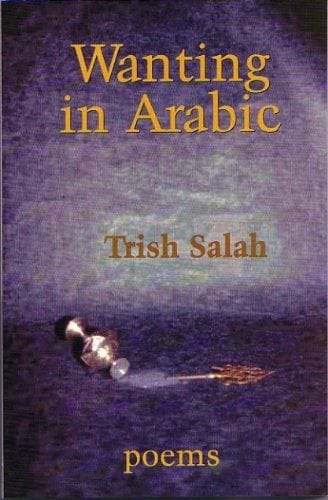
As imperial war rages across West Asia, I grabbed from my shelf the poet Trish Salah’s 2002 collection Wanting in Arabic, a foundational work of transsexual poetics and English-language Arab literature. Here is a short excerpt of the poem “Ghazals in Fugue.”
With our weight in lebne, mint, parsley, burgle, beans for ful, lamb
For kibeh, we beg no guarantee of country. Anything but war
Until the third bottle of wine, allows someone to ask
If, in Lebanon I am that man, if not, that war,
My father wanted. You want to know what bargains
With snow will I make? Were my cousins not in that war?
Would I not have been with them, at Sabra, at Shatilla?
Naive to the war, I break all our glasses, this ghazal's form, smiling
(Read the full poem, along with “Phoenician Lesbian,” here.)
The ghazal is an Arabic poetic form that is now celebrated all over the world, characterized most clearly by its amatory address and the repetition and variation of a phrase or word at the end of each couplet. Salah, a Lebanese and Irish Canadian poet, calls throughout this ghazal on the repetition of “war,” of “anything but war,” “not, that war,” “in that war” with agonizing beauty—even when the poem breaks the form, smiling, war is still present in the line. Wanting in Arabic is truly one of the great transsexual books, and I’d recommend spending time with the entire collection if you haven’t. I love in particular the way Salah combines lyric and more talky language, history and the present. The poem “Phoenician Lesbian” is a resonate example.
i ended up my daddy's little girl didn't i?
heartbreaking, he didn't live to see the day & the boy
i was, caught dead in a crossfire in Beirut or Belfast
prostrate before my pretty Mohammed ever after
and nothing to do with Phoenicia
or Lebanon, but ex-girlfriends' and after my surgery comes
memories of a childhood, Cypress that boy's dead by any other name
where my cousins also fled a June War in '67
you know what the dead do best is rise
and, called Phoenix-like, again
to return to Lebanon
where i have never been
my name should be Phoenicia
i'll prefer Yismine, for my aunt's sake.
for shame's sake, my French, my Arabic will mime strangers' tongues
missing my father's tongue
It can feel deadening to take in endless reports of violence and analysis of politics and war. Reading poetry or encountering art helps me to remain with my humanity when I face these atrocities, and to remain, too, with the humanity of the people living under the bombs. I have been reading works in translation for twenty-five years and still know so little of the rich Islamic and Arabic literary traditions.
My first encounter with this poetry was around when I left my white hometown at eighteen, just starting college as the September 11th attacks occurred. For my entire adult life, mainstream institutions and the state have worked overtime to convince me that there is a divide between trans people and Muslim people. This insistence that Islam is inherently anti-gay is called upon to justify the imperial wars and to further stoke divisions here in the States. In reality, I’ve known gay and trans communities and Muslim communities to be allies in many leftist causes, working together despite the racism and heterosexism within our movements that threatens solidarity.
The modern gay and trans rights movement took shape alongside other movements for liberation, including anticolonial struggles and Black liberation struggles carried on in part by Muslim organizers. In the immediate wake of Stonewall, just before forming STAR with Marsha P. Johnson, Sylvia Rivera joined with the radical Gay Liberation Front, having been impressed with the group’s work protesting the war in Vietnam and their solidarity with the Black Panther Party. That same year, 1970, the Panthers issued statements in solidarity with the gay movement and the women’s movement, as well as statements in support of Palestinian liberation after the Party established daily contact with the Palestinian Liberation Organization through a BPP office in Algiers. As part of their work to foster solidarity with other liberation movements, the BPP convened the Revolutionary People’s Constitutional Convention in Philadelphia and then Washington, D.C., at the end of 1970. The Gay Liberation Front attended, with hundreds of gay and trans people participating alongside representatives from a broad array of communities and causes. The first convention opened with a screening of The Battle for Algiers. Immediately after forming STAR, Rivera attended the second convention to represent her group and met Huey P. Newton there.
Even when the moments are fleeting, we have always been strongest together. That is why they try to keep us apart.
In my own life, I recall the connections I made with Muslims and Arab immigrants in opposing the War on Terror and the expanding police surveillance state. Over the past two decades in the Midwest, in particular, I have watched as these connections among gay, Muslim, immigrant, Black, and labor communities have grown into a robust progressive movement that has achieved many wins, with Minneapolis being a prime example. In state prisons around me, the small town where I live, college campuses in the cities nearby—all across my life, I see solidarity between Muslims, immigrants, people of faith, and trans and gay communities, and major political gains coming from this work. It is heartening as we must now work together to stop the war in Iran.
Of course, it is the same Christian nationalists driving the anti-gay movement here who champion this war and most loudly insist that Muslims hate gay people. In contrast, I feel great pride in the ways that trans communities have shown up in support of Palestine over the past years.
Trish Salah again:
stumbling backwards, careful not to run
i am watching someone fall to her knees to avoid the swing of a baton,
i am wondering what force that might possess,
coming from a man on a horse moving at such speed.
i am watching the horses go past.
my love says, “We should join the others.
We should be over there.”
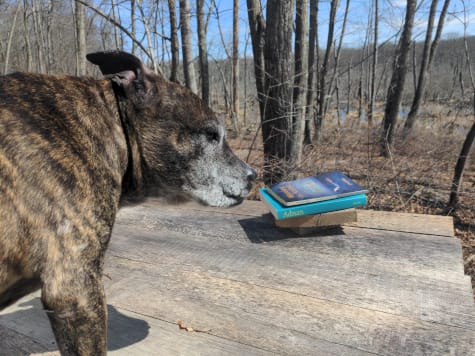
Along with Salah’s Wanting in Arabic, I also returned these past weeks to Etel Adnan’s “To Be in a Time of War.” Adnan was a major global writer and painter, a poet born in Beirut in 1925 and who moved to the United States at thirty. She was also a lesbian and the long-time partner of artist and publisher Simone Fattal. In “To Be in a Time of War,” Adnan writes in crisp prose the experience of her daily life as the United States invaded Baghdad in 2003. It begins with mundane details—“To listen to the radio, to put it off, to walk a bit, to think, to give up thinking, to look for the key, to wonder, to do nothing, to regret the passing of time, to find a solution, to want to go the beach…” As the paragraphs continue and the war begins, philosophical and emotional questions become more urgent, sometimes contradictory. Daily life continues nonetheless, spliced in.
To keep a benevolent look. To complain about noise. To cry over the sack of Baghdad’s architectural museum. To feel pain. To bury love. To spit bitterness. To brush one’s teeth. To be sure that the day will look like yesterday. To keep being surprised by the reporter’s insensitivity. To throw the paper away. To remember the different wars that wove one’s life. To look in one’s brain at English soldiers walking in Beirut. To not reach them, because they will remain images. To wash one’s hands, dry them. To take a pill. To stare at the curtains. To not sleep during the day.
“To Be in a Time of War” gets at one of the core questions of our time, how to live and remain with our humanity while war and atrocity rage. It is something that I discuss often with friends. How are we supposed to write our silly little emails and pay our taxes and sit in traffic while the world burns? “To put on the radio. To listen and to be hit in the face with much poison. The curse the hour, the fire, the deluge and hell.” Adnan brings her own experiences of war, family, and displacement to these questions, as Salah does in her contemporaneous collection. War has not directly impacted my life. I have never had to flee bombs, nor have my family, not since my grandfather fought in Europe during World War 2. But these writers help me in seeing past my own comfort and confusion, to remember how to feel, and this is an incredible gift.
What a blessing to share this life with Muslims, friends and comrades! What a joy to be a transsexual in the world!
&c
I have not yet written much here about transsexual poetry, although there is an ancient connection of transsexuality to poetic arts, especially through spirituality, ritual, and mystic practices. In modern times, poetry always provides a home for our writing even when other genres might not. A poem is a powerful thing, you should sit down and write a little poem yourself, right now.
“To Be In a Time of War” appears originally as the final piece in the collection In the Heart of the Heart of Another Country. The version I read appears in the two-volume selected works of Adnan, To Look at the Sea Is to Become What One Is, published by the incomparable Nightboat Books.
The Revolutionary People’s Constitutional Convention was assembled, of course, to write a new constitution. Seems like a demand we could pick up now! Ultimately I still feel, abolish the state, but in the meantime we’re at least overdue for an expanded Bill of Rights.
Thank you for reading my newsletter. Please tell your friends!